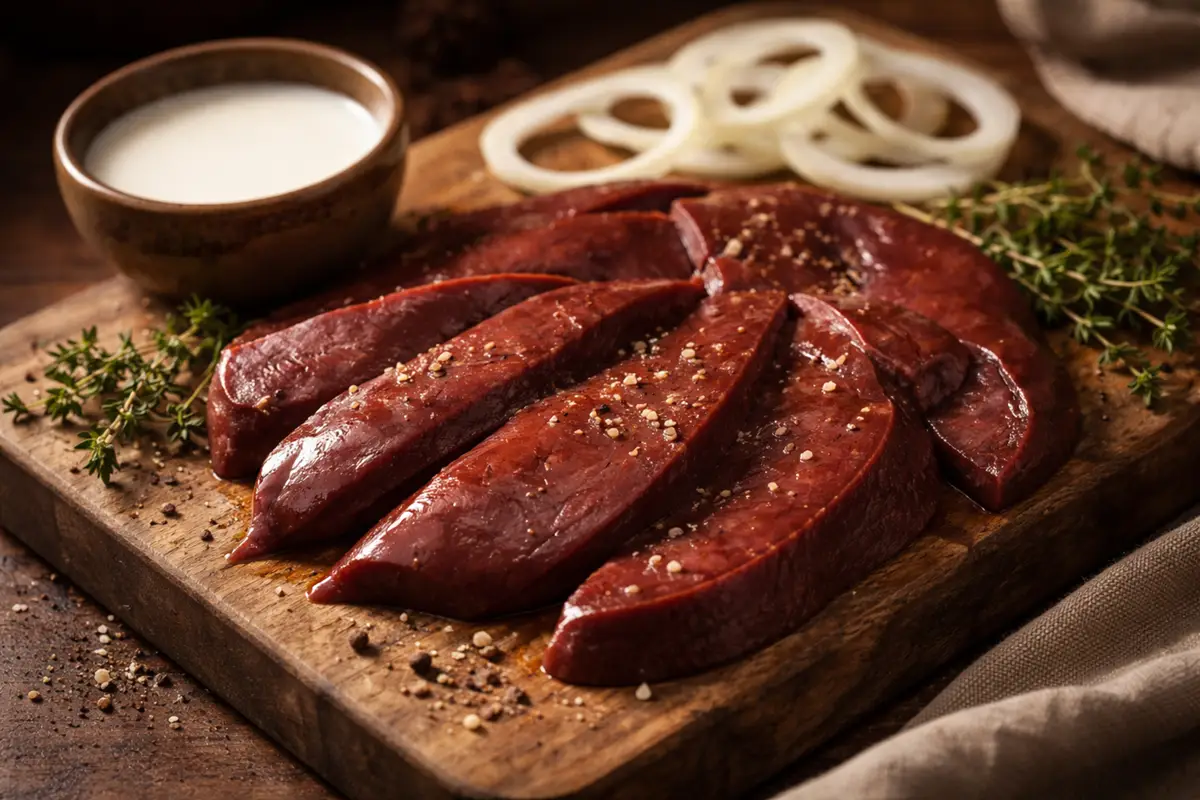
Beef Liver: The Complete Guide to Buying, Preparing, and Cooking It
Beef liver is one of the most nutrient-dense foods on earth. Here is what the science says, how to handle it, and how to make it taste good.
The Most Nutritious Food Most People Are Afraid to Cook
There is no food more nutritionally concentrated, per calorie, than beef liver. That is not a marketing claim — it is what the data shows. A 100g serving of raw beef liver provides over 2,400% of the daily value for vitamin B12, more than 300% of the daily value for vitamin A, over 1,000% for copper, and significant amounts of riboflavin, folate, heme iron, zinc, selenium, and CoQ10.1
If you designed a nutrient supplement from scratch and then found the same profile in a whole food, you would consider it remarkable.
The remarkable thing is that beef liver has been largely absent from mainstream Western home cooking for roughly half a century — not because evidence emerged that it was harmful, but because it became unfashionable, associated with poverty, and difficult to find in an era when supermarkets prioritized muscle cuts. Early 20th century home cooking treated liver as a matter of course: multiple preparations, different techniques, an assumed familiarity. That familiarity is what this guide aims to restore.
What Is in Beef Liver — The Full Nutritional Picture
Per 100g of raw beef liver, USDA data shows the following approximate values.1
Macronutrients: 135 kcal, 20g protein, 3.6g fat (1.2g saturated, 0.5g monounsaturated, 0.5g polyunsaturated), 3.9g carbohydrate (primarily glycogen).
On the vitamin side, the numbers are striking. Vitamin B12 comes in at somewhere between 988% and 2,471% of the daily value depending on source and breed — the single highest concentration of B12 in any common food. Vitamin A (retinol) sits at 338–552% DV. Riboflavin (B2) runs at 162–261% DV. Folate, niacin, vitamin B6, and choline are all present in amounts that would make a single serving nutritionally significant on their own.
For minerals: copper at 488–1,578% DV, making beef liver the highest dietary source of copper of any commonly eaten food. Selenium at 57% DV, phosphorus at 39% DV, heme iron at 27–36% DV. The heme form of iron is substantially more bioavailable than the non-heme iron found in plant foods — the body absorbs it at a rate roughly two to three times higher.
The variation in these figures reflects genuine differences between sources: grass-fed versus grain-fed cattle, animal age, country of origin, and analytical method. The numbers are high regardless of which reference you use.
This nutrient density is why liver appears so frequently in historical recipes across cultures — not as a delicacy, but as a practical food. Cultures that ate whole animals understood, empirically if not biochemically, that organ meats delivered something that muscle meat alone did not.
The Vitamin A Question — Real Caution, Accurate Scale
Beef liver’s extraordinary vitamin A content is its most important nutritional consideration, and it requires honest treatment rather than either dismissal or alarmism.
Vitamin A exists in two dietary forms. Beta-carotene — found in plant foods like carrots and sweet potato — requires conversion in the body before becoming active, and the conversion rate is variable and often inefficient. Retinol — the preformed vitamin A found in animal foods, concentrated most heavily in liver — is absorbed directly and stored in the liver.2
The body stores retinol for months. This is useful when intake is variable. It also means that very high chronic intake can accumulate to toxic levels — a condition called hypervitaminosis A. Symptoms of chronic toxicity include bone and joint pain, liver damage, headache, dry skin, and hair loss.3
The European Food Safety Authority (EFSA), in its 2026 updated scientific opinion, maintains the Tolerable Upper Intake Level (UL) for preformed vitamin A at 3,000 µg retinol equivalents per day for adults.4 A 100g serving of beef liver contains approximately 4,500–9,000 µg retinol — meaning a single serving can supply between one and a half and three times that daily upper limit.
What does this mean practically? Eating 100–150g of beef liver once or twice a week is not a problem for healthy adults — the body clears excess retinol over the days between servings. Eating large amounts daily, as some ancestral-diet advocates suggest, is inadvisable. And the following recommendation applies without qualification:
Pregnant women and women planning to become pregnant should not eat liver or liver products. EFSA (2026), NHS, and WHO guidance all reflect this clearly. High retinol intake in early pregnancy carries teratogenic risk — documented associations with fetal malformations involving the central nervous system, face, and cardiovascular system.5 This is not a marginal finding. It applies regardless of whether the liver is grass-fed, organic, or otherwise high-quality.
For healthy non-pregnant adults eating liver once or twice per week: the nutritional benefit is real and the risk is not significant. The caution is real. The scale matters.
Buying Beef Liver — What to Look For
Fresh vs. frozen: Fresh liver from a butcher is preferable for flavor and texture, but good-quality frozen liver is a reasonable alternative. Buy frozen liver that has not visibly been thawed and refrozen — repeated freeze-thaw cycles affect texture significantly.
Age of the animal: Calf liver (from cattle under roughly twelve weeks) is milder, more tender, and more expensive. Adult beef liver is stronger-flavored and firmer — it benefits more from soaking and from robust preparation. For first-time liver cooks, calf liver is the more forgiving starting point.
Color and smell: Fresh beef liver should be a deep reddish-brown with a smooth, moist surface and a clean mineral smell. Liver that smells sour or ammoniated, or shows grey or greenish discoloration, should not be purchased.
Grass-fed vs. grain-fed: Grass-fed cattle liver tends to have a slightly stronger flavor and marginally higher concentrations of some micronutrients. The nutritional difference between the two is real but not dramatic. Both are dense.
Where to buy: A butcher that handles whole animals will consistently have better-quality liver than a supermarket. Ethnic markets — particularly those serving communities with strong organ meat traditions, including Eastern European, West African, and various Asian communities — often stock fresher liver at lower prices, and may carry a wider variety (pork liver, lamb liver, chicken liver) alongside beef.
Preparation — Step by Step
Step 1: Trim the membrane and bile ducts
Beef liver has a thin outer membrane and sometimes visible bile ducts — lighter-colored or greenish tubes running through the tissue. Remove both before cooking. The membrane causes the liver to curl and toughen during cooking; bile ducts carry concentrated bile that imparts extreme bitterness to anything they touch. Use a sharp knife and take your time here. This single step matters more than anything else in determining the final flavor.
Step 2: Slice to consistent thickness
For pan-frying, slices of 1–1.5cm are ideal. Thinner and the liver overcooks before it develops a proper crust; thicker and the outside is done while the center remains raw. Consistent thickness is the foundation of even cooking.
Step 3: Soak (recommended, not mandatory)
Place the sliced liver in a bowl and cover with cold whole milk. Leave in the refrigerator for one to two hours. The casein protein in milk binds to bitter compounds and to residual iron-rich blood in the tissue, producing a measurably milder result.6 Do not soak for more than two hours — prolonged soaking degrades texture, making the liver grainy and mushy.
If milk is unavailable, cold salted water or acidulated water (cold water with a splash of lemon juice or white wine vinegar) produces a similar effect. Cold salted water works through osmotic pressure, drawing blood and fluid out of the tissue; lemon juice works through mild acid denaturation of bitter-contributing proteins.
After soaking, remove the liver, discard the liquid, and pat each slice very thoroughly dry with kitchen paper. This step is critical. Wet liver steams in the pan instead of searing; you will not get the Maillard browning that improves both flavor and texture.
Step 4: Season immediately before cooking
Salt draws moisture from meat. Season liver immediately before it goes into the pan, not in advance. A light dusting of flour before seasoning is optional but traditional in many European preparations — it creates a slightly crispier exterior and helps even browning. Shake off any excess.
Cooking Methods
Pan-frying — the standard approach
Use a heavy pan: cast iron or stainless steel. Heat it until genuinely hot before adding fat. Lard or beef tallow is traditional and produces excellent results. Butter works at moderate heat but burns at high heat and will smoke aggressively if the pan is very hot. A neutral high-smoke-point oil (refined sunflower, for example) is a practical alternative.
The liver should go into the pan without crowding — if slices touch, they steam rather than sear, and the exterior turns grey before the interior is done. Cook over medium-high heat for two to three minutes per side for 1cm slices. The interior should remain slightly pink. Overcooked liver — grey throughout, firm, dry, with a pronounced bitter and sulphurous edge — is the primary reason most people say they dislike liver. It is almost always a technique problem, not a flavor problem.
A note on internal temperature: food safety guidelines recommend 71°C / 160°F for organ meats. At this temperature the center will be just barely pink. Some experienced liver cooks stop slightly before this point, accepting a marginal safety consideration in exchange for noticeably better texture. This is a personal decision; follow current food safety guidance when cooking for anyone immunocompromised or otherwise vulnerable.
Braising
For older or tougher liver, or where a softer, more yielding texture is desired, braising works well. Sear the liver briefly on both sides to develop color, then transfer to a braising liquid — stock, wine, tomato, sliced onion — and cook covered over very low heat for 20–30 minutes. The result is entirely different from pan-fried liver: deeply flavored, soft, suitable for richer, more substantial preparations.
The 1930s approach: long-cooked with onions and fat
The cookbook’s liver preparations consistently pair it with slowly cooked onions and rendered fat. This is sound culinary logic: the sweetness and umami depth of properly caramelized onions — a process that takes a minimum of 30–40 minutes over gentle heat, not the five minutes most modern recipes describe — provides direct contrast to liver’s mineral intensity, while fat carries flavor and prevents the liver from drying out.
This combination appears across European culinary traditions: British liver and onions, Venetian fegato alla veneziana, French foie de veau à la lyonnaise. It has persisted across centuries and across national boundaries because the pairing is genuinely effective, not because of tradition for its own sake.
Flavor Pairings That Work
Beef liver has a strong, assertive flavor profile — mineral, slightly metallic, with pronounced umami depth. The ingredients that pair best with it either stand confidently alongside it or cut through it with sharpness and acid.
Onions and shallots caramelized low and slow, until deeply golden and sweet, are the classic pairing. Bacon and smoked meats provide salt, smoke, and fat that complement and contrast simultaneously. Acidic elements — a splash of red wine vinegar, lemon juice, or capers added at the end of cooking — brighten the flavor considerably and reduce the perception of heaviness. Fresh herbs (flat-leaf parsley, thyme, sage) added after cooking preserve their brightness. Mustard, particularly Dijon, works well either as a sauce component or a thin coating before cooking. Garlic is useful as a background note but can overwhelm if used too liberally.
What does not work: delicate flavors that the liver simply overpowers. Very light sauces disappear. Cream sauces can work if they are heavily seasoned and acidified.
The “Liver Is Full of Toxins” Myth — Addressed Directly
A persistent concern about eating liver is that, as the body’s primary detoxification organ, it must store the toxins it processes. This is a misunderstanding of liver physiology.
The liver filters blood and processes toxic compounds through transformation and excretion — it converts fat-soluble toxins into water-soluble forms that the kidneys can eliminate. It does not significantly accumulate the compounds it processes. What the liver does store in meaningful amounts are nutrients: glycogen, fat-soluble vitamins (A, D, E, K), minerals, and B vitamins. Eating liver delivers a concentrated dose of those stored nutrients — not a dose of environmental contaminants.1
The more legitimate concern with conventionally raised livestock is antibiotic and hormone residue. This is a real consideration, regulated through maximum residue limits in commercially sold meat in the EU and elsewhere. Grass-fed or organically raised liver addresses this concern if it matters to you.
Starting Points From the 1930s Cookbook
The cookbook includes several liver preparations that translate cleanly to modern kitchens. In order of complexity:
Liver with onions and lard — the simplest preparation and the best starting point. Long-caramelized onions, a hot pan with rendered lard, liver sliced thin and cooked fast. This dish requires patience for the onions (do not rush them) and speed for the liver (do not overcook it). Two ingredients, opposite tempos, one very good result.
Liver dumplings — ground liver combined with bread soaked in milk, egg, flat-leaf parsley, and seasoning, formed into small dumplings and poached in beef stock. This is an excellent way to introduce liver to people who are skeptical of it whole — the texture is soft, the flavor is distributed evenly through the dumpling, and the beef stock provides a familiar, comforting frame. Liver dumplings appear across Central European cuisines throughout the interwar period; the cookbook has at least two versions.
Braised liver with wine and aromatics — liver seared briefly then braised slowly in red wine with sliced onion, bay leaf, and thyme. The long braise transforms the texture entirely; what emerges is closer to a ragù than to pan-fried liver. This preparation is forgiving of slightly older liver and works well served over polenta or with boiled potatoes.
Full recipes for each will be published in the from-the-archives series, adapted from the original book with measurements converted and technique updated where necessary.
Beef liver is among the most nutritionally significant foods available, with real and documented cautions that apply to specific populations — particularly pregnant women. Nothing in this post constitutes medical or nutritional advice. If you are pregnant, immunocompromised, or managing a condition that affects vitamin A metabolism, consult a qualified healthcare provider before making dietary changes.
Sources
Footnotes
-
U.S. Department of Agriculture, Agricultural Research Service. FoodData Central. Beef, liver, raw. https://fdc.nal.usda.gov/food-details/168626/nutrients ↩ ↩2 ↩3
-
National Institutes of Health, Office of Dietary Supplements (2026). Vitamin A and Carotenoids — Health Professional Fact Sheet. https://ods.od.nih.gov/factsheets/VitaminA-HealthProfessional/ ↩
-
Penniston, K.L. & Tanumihardjo, S.A. (2006). The acute and chronic toxic effects of vitamin A. American Journal of Clinical Nutrition, 83(2), 191–201. https://doi.org/10.1093/ajcn/83.2.191 ↩
-
European Food Safety Authority Panel on Nutrition, Novel Foods and Food Allergens (NDA) (2026). Scientific opinion on the tolerable upper intake level for preformed vitamin A and β-carotene. EFSA Journal, 22(6), e8814. https://doi.org/10.2903/j.efsa.2026.8814 ↩
-
Committee on Toxicity of Chemicals in Food, Consumer Products and the Environment (UK) (2022). Statement on the effects of excess Vitamin A on maternal health. UK Food Standards Agency. https://cot.food.gov.uk/sites/default/files/2022-12/Statement%20on%20the%20effects%20of%20excess%20Vitamin%20A%20on%20maternal%20health%20Acc%20V.pdf ↩
-
McGee, H. (2004). On Food and Cooking: The Science and Lore of the Kitchen, revised ed. Scribner, New York. (Reference for the role of casein in binding iron compounds and reducing off-flavors in organ meats.) ↩